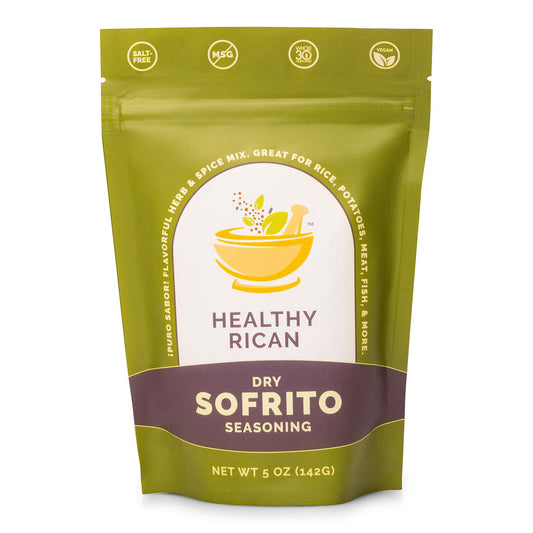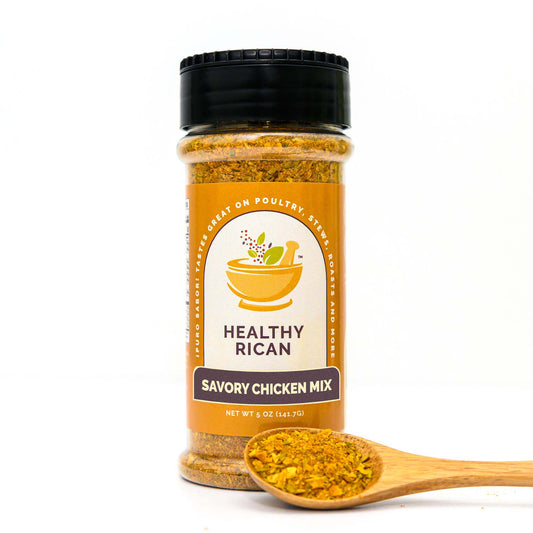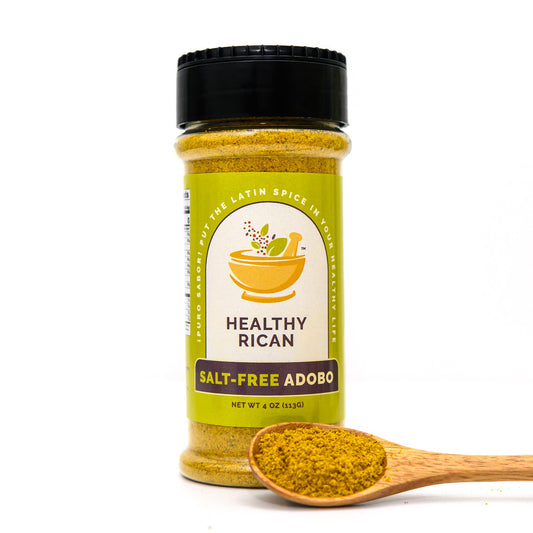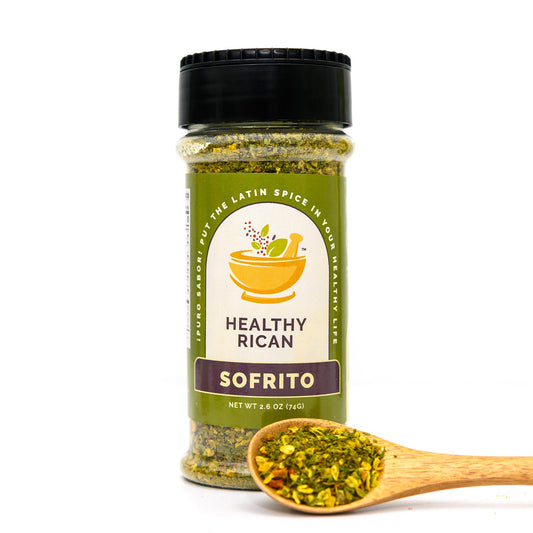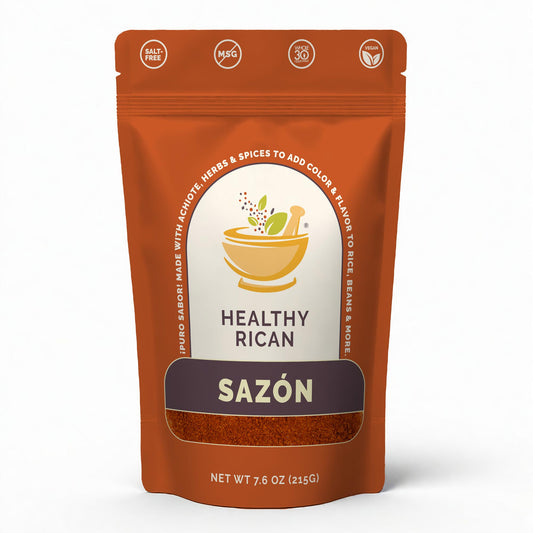

If you’ve ever wondered how to use Salt-Free Adobo, start with the foods you already cook: chicken, eggs, beans, vegetables, and even a comforting pot of bacalao guisado. A little seasoning can take dinner from “I guess we’re eating this” to “¿queda más?”
I’m Mayra Luz Colón, founder of Healthy Rican, and I believe caring about your ingredients should still leave plenty of room for the flavors you love. We have things to do. Cooking a separate, sad dinner should not be one of them.
That’s why Salt-Free Adobo deserves a spot in your pantry. You get to build flavor first, then decide whether your meal needs salt at all.
Below, you’ll find ten everyday ways to use it, starting measurements, and a Puerto Rican-style bacalao guisado recipe that puts this versatile blend to work.

What Is Salt-Free Adobo?
Salt-free adobo is a dry, all-purpose seasoning blend made without added salt. Think of it as your shortcut to savory, aromatic flavor, with the salt decision left in your hands.
Healthy Rican Salt-Free Adobo combines garlic, onion, black pepper, turmeric, oregano, coriander, and cumin. It brings garlicky warmth, earthy herbs, and a little peppery bite to everyday cooking.
Here, “adobo” means the dry seasoning used in Puerto Rican-style cooking. If a recipe calls for canned chipotle peppers in adobo sauce, that’s a different ingredient.
Why Keep Salt-Free Adobo in Your Pantry?
Because dinner already comes with enough decisions.
One blend can help season your protein, vegetables, beans, and rice. It also lets you add more spice flavor when ingredients such as broth, cheese, olives, or salted fish already contribute salt.
Want a little salt? Add it separately, to taste. Prefer the dish as it is? Leave it alone. You’re the boss of this caldero.
A useful distinction: salt-free seasoning doesn’t automatically make the finished meal low in sodium. Everything else in the pot counts, too.
How Much Adobo Seasoning Should You Use?
For Healthy Rican Salt-Free Adobo, start with 1–2 teaspoons per pound of meat or vegetables, then adjust for your taste and the recipe.
These are suggested starting amounts, not rules handed down by the Council of Abuelas. Different blends have different strengths, and your dinner gets a vote.
Mix dry seasoning with a little oil for even coverage. For soups, beans, and sauces, stir it into the cooking liquid and give it time to mingle. Taste cooked food before adding more seasoning or salt.

10 Everyday Ways to Use Salt-Free Adobo
1. Season Chicken for Easy Weeknight Meals
For 1 pound of chicken, mix 2 teaspoons of Salt-Free Adobo with 1 tablespoon olive oil. Rub over the chicken before baking, grilling, or air frying.
Finish with a squeeze of lime after cooking. Serve with rice and a vegetable, and suddenly you have a plan. Look at you being organized.
2. Give Eggs a Little Personality
Start with ¼ teaspoon for 2 eggs. Whisk it into scrambled eggs or sprinkle it over a vegetable omelet.
Pair with avocado and toast, or leftover roasted potatoes. Breakfast can have sazón before you’ve answered a single email.
3. Roast Vegetables You’ll Actually Want to Eat
Toss 1 pound of vegetables with 1½ teaspoons Salt-Free Adobo and 1 tablespoon olive oil.
Try broccoli, cauliflower, carrots, zucchini, or a mix. Roast at 425°F, spreading everything out on the pan, until browned and tender. Start checking softer vegetables around 15 minutes; denser ones may need 25–35 minutes.
Crowded vegetables steam. Give them some personal space.
4. Wake Up a Pot of Beans
Add 1 teaspoon to 1½ cups cooked beans, or one drained and rinsed 15-ounce can. Simmer with ¼–½ cup water, a little sautéed onion, and tomato sauce if you like.
Taste after 10–15 minutes. Serve over rice or spoon into a bowl with avocado. Pantry dinner, handled.
5. Add Flavor to Rice
For 1 cup uncooked rice, start with 1 teaspoon Salt-Free Adobo, added with the water or broth. Follow the liquid ratio and cooking time for your rice.
Using salted broth? Taste the finished rice before adding salt. The broth may have already volunteered.
6. Make Ground Meat Work Harder
Use 2 teaspoons per pound of ground beef, turkey, or chicken. Cook with chopped onion and peppers for bowls, stuffed peppers, or a simple skillet meal.
For a quick tomato sauce, stir in ½ cup no-salt-added tomato sauce and simmer until the meat is cooked through and the mixture thickens.
7. Season Fresh Fish or Shrimp
Start with 1 teaspoon per pound of fresh fish or peeled shrimp, plus 1 tablespoon olive oil. Cook using your favorite method and finish with lemon or lime.
Seafood doesn’t need a complicated speech. A little seasoning, a little citrus, and dinner can speak for itself.
8. Upgrade Potatoes and Yuca
Toss 1 pound of cubed potatoes or sweet potatoes with 2 teaspoons Salt-Free Adobo and 1 tablespoon olive oil before roasting.
For yuca, cook it until tender first, remove the tough central fibers, then gently toss 1 pound cooked yuca with 1 teaspoon adobo and 1 tablespoon olive oil. Add more seasoning to taste.
Your side dish just became somebody’s favorite part.
9. Stir It Into a Dip or Dressing
Mix ½ teaspoon Salt-Free Adobo with ½ cup plain Greek yogurt and 1 teaspoon lime juice. Let it sit for 10 minutes, then taste.
Use it as a vegetable dip or drizzle over bowls. For a thinner dressing, add water 1 teaspoon at a time. Plain, unsweetened dairy-free yogurt works, too.
10. Build Flavor in Bacalao Guisado
Start with 1 teaspoon Salt-Free Adobo for 1 pound of dried salted cod before soaking.
Bacalao already brings salt to the party. Salt-free adobo lets you build the sauce’s flavor without automatically adding more. Onion, peppers, tomato, and garlic do the rest.
And that brings us to our featured recipe below.

Frequently Asked Questions About Salt-Free Adobo
Can I use salt-free adobo instead of regular adobo?
Yes, in recipes calling for a dry adobo seasoning. Use the recipe’s amount as a starting point, keeping in mind that blends vary. Salt-free adobo won’t supply the salt that regular adobo would, so taste the cooked dish and adjust separately.
Do I have to add salt to salt-free adobo?
No. Use it as is, or add salt to your food separately if you want it. Ingredients such as cheese, broth, olives, and bacalao may already provide enough.
Is adobo seasoning spicy?
Healthy Rican Salt-Free Adobo has black pepper for a little bite, but it isn’t a chile-forward seasoning. If you enjoy heat, add hot sauce or your preferred chile separately.
Can I use salt-free adobo on vegetables?
Absolutely. Start with 1–2 teaspoons per pound, toss with a little oil, and roast or sauté. It also works in beans, rice, and vegetable soups.
Does salt-free adobo remove salt from bacalao?
No. It adds seasoning without added salt. The fish still needs proper desalting before cooking, and the finished dish can still contain substantial sodium.
Give Your Pantry a Little More Sazón
The best pantry staples earn their spot by making everyday cooking easier. Salt-Free Adobo can show up at breakfast, help with a quick lunch, and season a pot of bacalao guisado for dinner.
Start with the measurements above, taste as you go, and make each dish your own.
Now tell me: what are you seasoning first?

Shop Healthy Rican Salt-Free Adobo and put that jar to work.
We provide the flavor. You have the control. ¡Puro sabor!